
Automatic language translation
Our website uses an automatic service to translate our content into different languages. These translations should be used as a guide only. See our Accessibility page for further information.
The first prison in Australia founded for the needs of Aboriginal inmates was opened near Brewarrina in far western NSW in June 2000. Named Yetta Dhinnakkal ("right pathway" in the Nyemba language) the minimum security centre could accommodate up to 70 young offenders on a 10,500-hectare property to keep them separated from older, hardened prisoners in other prisons and to teach them rural skills. Unfortunately, the centre struggled to attract enough inmates, due to its remoteness from their families, and was closed in 2020.
In September 2001, the High Risk Management Centre (commonly known as the Supermax) was opened at Goulburn Correctional Complex as the first such facility in Australia, making it the highest security prison in the country.

Other prisons to open around this time were Dillwynia Correctional Centre, a female prison, in 2004, and the Mid North Coast Correctional Centre, a 500-bed facility opened near Kempsey the same year.
Management of the medium-security Kariong Juvenile Detention Centre near Gosford on the Central Coast was transferred from the Department of Juvenile Justice to the Corrective Services NSW in November 2004, becoming the Kariong Correctional Centre. Wellington Correctional Centre, near Dubbo, opened in September 2007, and South Coast Correctional Centre, a 600-bed facility, opened near Nowra in December 2010.
An unexpected drop in the inmate population resulted in the closure of some mainly older prisons from 2011, including Paramatta and Kirkconnell (reopened 2015). The 119-year-old Grafton Correctional Centre was downsized and transformed into an intake and transient facility
There was then a pause in building, during which NSW prisons went smoke-free in August 2015. This followed a direction from Workcover that CSNSW provide its staff with safe workplaces, free from the risk of secondary smoking. Eighty per cent of inmates had smoked, so this was a major change. It was achieved without any major incidents.
As the prison population increased, greater attention was turned to reducing reoffending. This included providing inmates with more inmate access to literacy, numeracy, and training programs.
The EQUIPS (explore, question, understand, investigate, practice, succeed) suite of programs was launched in 2017 to address offending behaviour related to addiction, aggression, and domestic abuse as part of the reducing reoffending strategy.
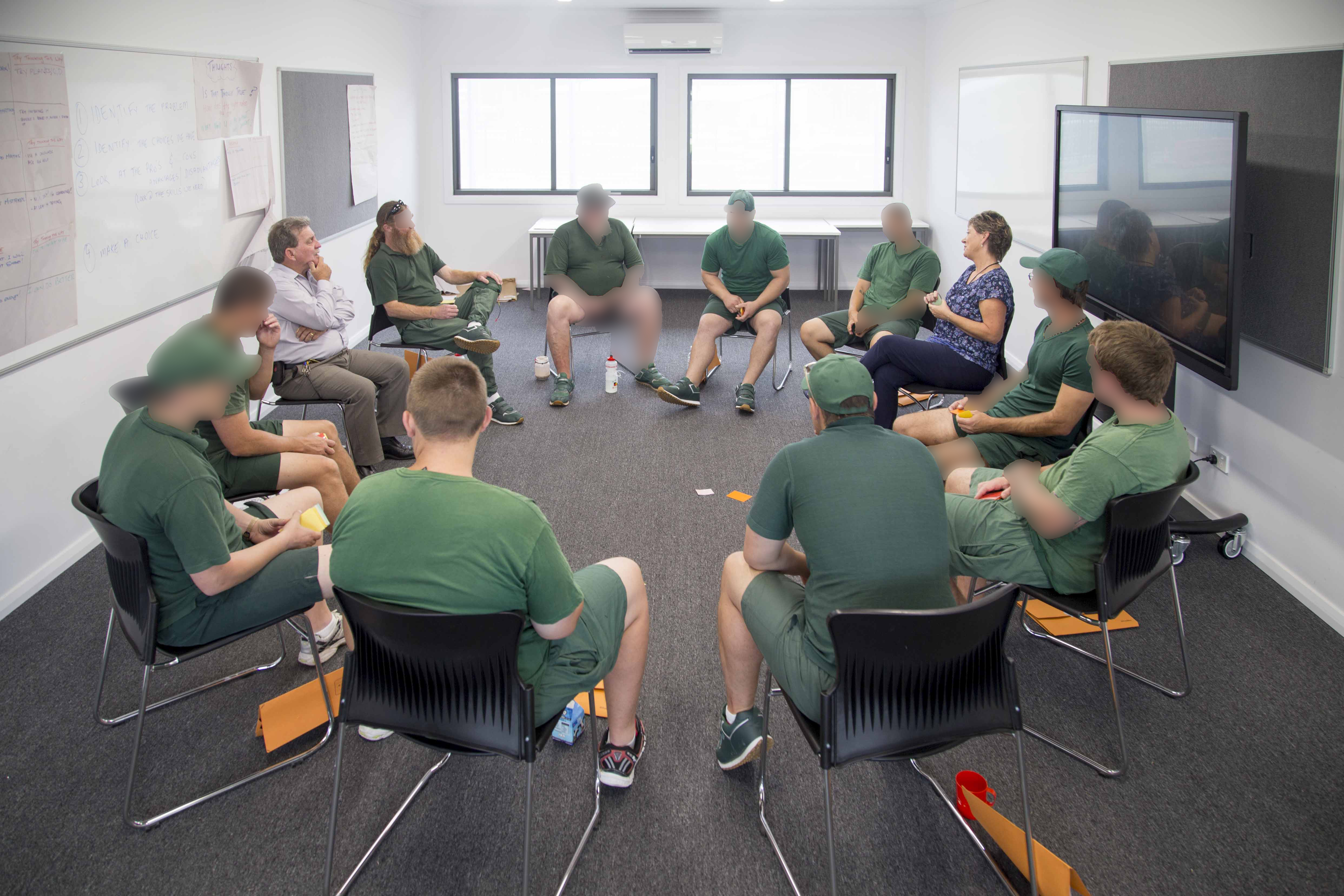
In June 2017, it was announced 10 high-intensity program units would be established to deliver rehabilitation programs to about 1,200 prisoners each year serving short sentences of six months or less. The units target domestic violence, general violence, and aggression, and targeting female inmates and Aboriginal and Torres Strait Islander inmates.
The then Labor government had privatised Parklea prison in 2009. The Coalition government, elected in 2011, was keen for further privatisation, and put the state-run John Morony Correctional Centre out to tender in 2017. CSNSW was allowed to lodge an "in-house bid" and won the right to continue to operate the prison, but under a more efficient model. The government also contracted out the building and operation of the massive Clarence Correctional Centre near Grafton, opened in 2020.
Meanwhile the state's prison had filled up, and in 2016 a $3.8 billion expansion program was announced, which eventually produced over a dozen new major facilities, most on the sites of existing prisons. These included:
With the availability of thousands of new modern beds, in September 2019 it was announced five of the state's smallest correctional centres would be closed the following year. These were Berrima, Grafton, Ivanhoe and Brewarrina correctional centres, and the lllawarra Reintegration Centre.
Staff member and prison photographer Sue Paull captured the final days of the Berrima Correctional Centre in 2020. Find out more about Sue, and see her photos of the centre.
As part of the operations improvement plan, Emu Plains and Kariong correctional centres were repurposed into a dedicated mothers' facility and transient centre, respectively.
The Outer Metropolitan Multi-Purpose Correctional Centre was renamed Geoffrey Pearce Correctional Centre, in memory of correctional officer Geoffrey Pearce OAM, who died in August 1997 from HIV after being stabbed by an inmate with a contaminated syringe in 1990.
At the same time, the John Morony Correctional Complex was renamed Francis Greenway Correctional Complex, after the English-born architect who came to Australia as a convict in 1814 and became Australia's first government architect.
The work of correctional officers has become better known and appreciated by the public due to increased publicity and the 2018 creation of National Corrections Day. This day started in New South Wales and soon spread to all other jurisdictions in Australia and New Zealand. In January 2018 the Australian Corrections Medal was inaugurated, and the first recipients announced as part of the Australia Day Honours.

Covid-19 presented one of the greatest challenges in CSNSW's history. When the pandemic began, there were reports of it spreading rapidly through prisons overseas. CSNSW and its partner, the Justice Health and Forensic Mental Health Network, introduced stringent precautionary measures, including quarantine, isolation, and mass testing and vaccination. As a result, there were almost no deaths or hospitalisations of staff or inmates.

Hear from Corrective Services NSW staff as they discuss how the Service responded to the COVID-19 pandemic.
Hear from Corrective Services NSW staff as they discuss how the Service responded to the COVID-19 pandemic.
Yeah, I was in and I was in Terrigal for the weekend in January and I remember there being an emergency phone, teleconference
0:28
being pulled together at the ministry and I was sort of sitting by the pool and listening to this teleconference and I remember just the panic rise and going,
0:37
okay, this sounds like it may not be another MERS or SARS, which we got through pretty easily.
0:43
This sounds really serious. The prior the, the pandemic plan that that was sort of
0:48
in archives from Corrective Services could be summed up. It was less than one A4 page. But there was a, a senior executive meeting
0:57
down in the commissioner's office, Mr. Severance conference room, which I was
1:03
tasked with delivering a short PowerPoint of potential impacts on
1:09
which and it was a very high, high level of that and pretty much touched on things like prisons are
1:16
probably have got a higher threat vector for transmission of of these sort of diseases through the infrastructure,
1:24
the underlying health conditions of inmates are typically poorer than those in the community.
1:29
And then also as well, the the impact on the thousands of correctional officer staff that's required. From that meeting
1:37
It was pretty much decided that a command post would be stood up. There was a large group of people had to come together very quickly
1:46
because there was no playbook, there was no contact tracing, hadn't been heard of, let alone how do you do it in a correctional environment?
1:52
What are the potential impacts? How does this impact on reception centres releasing?
1:58
So everything that we currently do, how do we do that with COVID? So again, so we set up daily
2:05
situation reports where centres had to report in. Yeah, look, this was in February I guess slash March in 2020
2:15
or there really were crazy times in terms of early that first quarter of 2020 where every government organization,
2:21
every private organization, every individual was after their own stock and stockpile of PPE, whether it was masks or
2:30
or or any number of other essential PPE equipment. So it was very difficult.
2:36
So we were trying to source materials from within New South Wales,
2:41
outside of New South Wales to the rest of Australia and then we very quickly went worldwide.
2:46
We moved offender reporting predominantly to phone reporting
2:53
and our staff largely worked from home.
3:00
We rotated people through our offices in teams. So for example, with a large office like Campbelltown,
3:08
we had four teams with three of those teams working from home and one of those teams continuing to work from the office
3:16
to provide essential services to the community. So for those individuals who couldn't
3:23
be monitored via phone reporting, we still allowed them to come into the office.
3:28
The other thing that we did during COVID is we made sure that we consulted and engaged with our people all the way along.
3:35
COVID was very much an adaptive challenge for community corrections. And what we found is that we didn't have a rulebook to follow.
3:43
We really needed to consult with our people and engage with them all the way along. And through doing that,
3:50
I think we came up with the best approach that worked for us. We decided with the command centre in addition to managing
3:58
potential operational crises that emerged that that every bit of policy that we developed
4:03
would be done in a very systematic manner and that in developing the policies, we do it in conjunction with Justice Health, with the New South Wales public health
4:12
authorities, with other experts outside of that domain and with the whole of the Corrective Services Executive
4:21
to socialize policy and to discuss it amongst the people before we put it out. And insure that every change we made
4:28
was actually documented and managed in that way. We also had a very strong adherence to evidence, so we very quickly
4:34
sought out evidence that was available in the international literature and didn't just rely upon being fed information from New South Wales Health
4:42
but satisfied ourselves and challenged thinking where that was appropriate. And so this approach seems to be evidence based,
4:48
this one isn't the emerging evidence around testing or the nature of exposure and the importance of wearing PPE,
4:56
all those sorts of things we tested ourselves independently in the literature, so I think that's what distinguished our approach.
5:02
I'm not sure that a Corrective Services organization would be the one you would predict would be interested in mathematical modeling.
5:09
And so there was some significant foresight in that, engaging with some mathematical modeler to guide the public health control measures.
5:19
Yes, but I mean, I commissioned the modeling. It was based on a view that I had. Is that
5:25
that I suppose that from the outset there were multiple things that you could do to prevent the disease.
5:31
Part of it would be involve locking every prisoner in the cell all the time, seeing nobody with obvious consequences for their wellbeing and mental health
5:39
and the ability for the system to function. So trying to understand of all of those
5:45
available controls which ones were the most efficacious? There were there were outbreaks being reported in prisons centers
5:53
across the globe, many which were really of substantive concern.
5:59
Essentially, the great majority of the inmate population very rapidly becoming infected and hospitalizations and deaths.
6:06
So so some of the things that we found very quickly using that model were that
6:12
as had already occurred overseas, left untouched with no control measures, outbreaks
6:18
inevitable, essentially all of the prison population. So we model, for instance, a prison with with on the order of a thousand inmates
6:27
and found that at the peak of the epidemic and abated 600 per day were becoming infected
6:35
of relevance to corrective and health services in the sector. We noted that there would be spread from inmates to staff
6:42
and that that would impact on the available staffing capacity at the peak of the epidemic,
6:48
with about a third of all staff members unable to attend because they had become infected.
6:54
Yeah, I remember. I remember very well the morning it kind of hit me as an executive
7:01
that we were facing something that we hadn't faced before, and that was we had one staff member come in positive to our forensic high
7:10
secure hospital and it knocked out nearly a third of our staff in one go. And
7:16
and that that morning we looked at pandemic planning. And we looked at our.
7:21
Disaster planning. And when that's not going to work as well as we thought it would be, you know, brilliant plans and I think that was the same for everybody,
7:29
not just for justice, health, for the whole of health. And in fact, I think for the world that no commissioner,
7:37
Mr.Corcoran was the assistant commissioner of operations and we had many a late night phone call just going through what we're going to do.
7:46
And we tried to develop a consistent and simple worst case scenario plan
7:54
which would do us going forward. So, you know, while we we made certain decisions very quickly
8:01
and some very good decisions very early on, such as closing down visits and making sure that we restricted the entry
8:08
to our correctional centers, We were waiting for advice all the time. You know, we were waiting for advice on what the best PPE was.
8:16
For example, when we needed to wear certain PPE, what were the environments where we had to make sure
8:23
that we upped the level of protection for staff and inmates as well? What we had to do on escorts?
8:29
How would we actually fulfill our commitments to the court in terms of appearances for inmates?
8:35
Now, some of those decisions were made for us, courts and others made the decisions to say no jury trials, we will do everything by AVL.
8:42
But it was all completely new and we were learning as as we went along.
8:49
There's a whole range of things that, you know, we didn't know about and we were really worried about all sorts of things.
8:55
I remember myself and the executive director of Justice Health did a series of,
9:03
I guess, communiques with the inmates and the staff in every correctional centre around the state.
9:11
You know, we were trying to Zoom in or we were trying to have telephone calls
9:17
because the Zoom technology wasn't quite up to scratch back then. And, you know, we were telling them all
9:24
you have to, you know, wipe everything down and you'll catch it. It will be on you're on the rails there for two days.
9:31
We just didn't know what the draw was. But yeah, things like masks and things of that nature were,
9:40
you know, at that stage, you know, and not, you know, not required in certain areas, but mostly staff, you know, understood the seriousness.
9:48
But as you moved out from the metropolitan area, I think, you know, staff
9:54
were thinking, well, this is just something that happens in Sydney, it's in Sydney, we won't have to worry about it.
10:00
And so consequently, I think, you know, compliance with mask wearing out in,
10:05
you know, in regional areas was was not as rigid as you would have in the metropolitan area.
10:11
I remember going out to the country Correctional Centres and people were coming up and hugging me and hey, ah hi mate.
10:19
Okay, hold on, don’t know about this COVID thing. Then what we had to do was start transporting people
10:26
in a very different way. So there was a lot of work done to review the trucks, the air conditioning of the trucks, the
10:33
the flow between the back compartments of the front compartments. We had fleet working nonstop with specialists to make sure
10:40
that everything we were doing was to mitigate risk as far as possible. You know, we were putting in new equipment in terms of the filters
10:48
and that to make sure our staff were safe for the SOG space. What we did, particularly in the early stages of COVID,
10:55
we almost broke into those teams of A and B, we had our regional people. So we were ensuring we had a response capability regardless of
11:03
if one person went positive. So we were minimizing the amount of people the teams would have contact with.
11:10
In a highly unionized workforce like ours, I can't express how grateful we've been to the PSA for their incredible cooperation
11:18
in almost every aspect of what they're doing, making hard decisions. But I realize that the consequences and taking some leadership with their members
11:25
because quite understandably, staff became distressed on a numerous occasions about the impacts on themselves, concerns about the safety
11:33
and wellbeing of their families. All those things are highly volatile and with a union with a very strong focus
11:38
on work, health and safety, we could have seen the whole system locking down, but I think we got a very measured response.
11:45
Well, as you know, Wendy Hoey, the executive director, Justice Health and myself, were describing to him, I said, look, this is a static cruise ship
11:51
because remember, we just had that that big cruise ship docking in Sydney Harbor and then disgorging everybody who then got COVID.
11:59
And unfortunately, a lot of people died as a result of that one. So, you know, that's the sort of messaging we were trying to give people
12:06
that, Yeah, look, it once it gets in, you know, it will be hard to contain.
12:12
Given it was in its early days as well. It was a lot of uncertainty. So the offices were very stressed, the nursing staff were freaking out
12:19
and the officers would come to the nurses for guidance and support and vice versa.
12:24
But the advice kept changing and that's what caused the hysteria. I know in the very, very early stages to ease the hysteria because it wasn't
12:32
just the staff that were freaking out, it was the patients too, And obviously they’re only seeing the media. But obviously being a setting where we have a high risk of transmission,
12:43
it it was extremely nerve wracking. You know, I was talking to the guys in the command post
12:49
and we came up with an idea to build a field hospital. And you've probably seen that and, you know, as part of this and,
12:58
you know, the fact that we were able to get funding for it and it took six weeks, six weeks to build the thing, and it was just
13:05
unbelievable that we were able to pull that together in six weeks. One of our nurse managers, he had experience in working
13:12
with emergency crisis situations, so he actually developed the field hospital alongside with the command post and other key stakeholders.
13:21
He engaged with some external hospitals as well to to ensure that we were going to satisfy best practice.
13:27
So in the initial phases, it was my understanding that the field hospital was actually going to be for if it became
13:34
so unbearable that the external hospitals couldn't take our patients. I spoke to Blake Cornwell and we got one of the CSI guys
13:42
down from Cessnock by the name of Scott Everingham to to take charge of setting up a field hospital.
13:48
And even at that point, the field hospital wasn't the only thing we were talking about, like we were even considering, well it was being considered
13:55
and we were looking at options for portable morgues as in shipping containers that are refrigerated.
14:02
And I remember sitting there late one night just having a conversation with the people that were there and going this is
14:09
where has, who ever thought this would happen like this? And another early decision, I think it was in April
14:15
of 2020 was the introduction of a quarantine period for fresh inmates. And we always knew it was it was people coming into our centres,
14:22
whether they were inmates, staff contractors that were our highest risk. The vectors of concern as they were, were once
14:30
impersonally known as. So quarantine coming in, This was just predating vaccines.
14:35
So there was no vaccines to to to be heard of, let alone anything coming along any time soon.
14:42
And we needed to protect our existing inmates. One of the first things that we did and it was Kevin Corcoran myself
14:50
did very early on, is we did virtual meetings with the inmates.
14:56
Our patients, as we call them, in every center. And we did that across New South Wales and we sat with them and we spoke to them
15:04
about what we were going to have to do with isolations with 14 days. We talked to them about, you know, their phone calls and how to access that.
15:13
And I think that really started a really good collaboration between the inmate population and ourselves,
15:21
The staff, probably the most I got from the staff in the early days, from our health staff,
15:27
was concerned about the restrictions that were putting in place. And they just challenged us each other every day were they the right thing to do.
15:36
You know, And we were isolating people for 14 days and in the early days upfront and
15:42
and that was a hard thing for our staff to do because we we tend to fight for human rights, we tend to fight for, you know,
15:50
people having access. And we we were sort of taken that away in a way. Where sometimes from a health perspective.
15:57
And the health advice is not necessarily been what people would've wanted to hear. So it's really having enough evidence,
16:05
having some really good data behind you about why you're
16:10
you're advising what you're advising on. Because when we were advising to lock down a centre
16:16
or to isolate somebody, Corrective Services have to do that. And it's not an easy thing to do.
16:21
I think for the prison setting in particular, it was so different. I don't think. You know, unless you work in the system,
16:28
anybody really understands the complexities. And the complexities were just coming at as all the time from,
16:35
you know, areas being taken out because the food wasn't going to be supplied across the state to feed prisoners, patients
16:42
the industries. All of those things, you're like, Oh my God, you're like, It's like a tsunami.
16:48
So I think, you know, really trying to be agile and be responsive. I think, you know, as Wendy was said, there was times that we didn't agree.
16:54
Sometimes, you know, Corrective Services would be, “but we can't do that”. And I'm like, but you have to. “But we can't”.
17:00
But you have to, so it is very much a push me pull me situation at times. And then we would try and negotiate
17:06
and work out a compromise and you know, between both organizations. And that's always a very delicate balance in the sense that, you know,
17:13
security versus health. Traditionally things have been slow and there's no great rush to make decisions.
17:19
And change doesn't have to be implemented in a, you know, as as fast paced sort of way.
17:24
Whereas as relentless as this has been is we didn't have that luxury.
17:29
We couldn't go and form a subcommittee and, you know, have a a large consultative group. So one thing I will say and you know what we learned,
17:39
we all stopped watching the news and we all stopped reading papers.
17:45
And it just, you know, it's been it was really interesting, all of us. And I think it was just to see the pandemic played out in the media
17:54
and not be able to really shouting at the television sometimes because it was just such scaremongering and the hype and things.
18:02
And I think people forget that when when you've got a loved one in prison, you can't see them, you can't check, you don't know when you're hearing this
18:10
on the television and things. And it was so hurtful to our, the families and the carers of of the prisoners
18:17
and inmates, but also the prisoners knew that's what their family were hearing. The group that were there for the first 3 to 6 months, the amount of work and
18:26
stress and everything that everyone was under because we're getting everything from around the state, we're like the focus point as well as, you know, having to,
18:34
you know, answer the phone calls to the Commissioners and Assitant Commissioners about things going either rightly or wrongly, in various areas.
18:42
I hope that sort of gets captured somewhere with the great work those those people did for the initial stand up of it,
18:49
because no one knew what they were doing. It was you know, it was we, and I can say it
18:55
now, we got plenty of criticism, too, from from people in the field that we didn't know what we're doing and all the rest of it.
19:01
And yet, at the end of the day, I remember having a conversation with quite a few people saying they're hundred percent right, but no one would know what they're doing.
19:08
No one's going to step in and go, Right, step one, two, three. This is how we go. So we very early on in the epidemic, the government responded very positively
19:16
and favorably to a suggestion that we created, which was to utilize
19:23
the authority of the commissioner, which is quite unprecedented, to release people from custody If there was a good order and security of public health,
19:30
and we'd seen it be seen, in use in a number of other jurisdictions where they had had to let out very large numbers of people immediately
19:37
that the pandemic was out of control at that stage. And in some jurisdictions, particularly developing countries that had let out
19:43
large numbers of people from jail because I had no means of actually managing the disease.
19:48
Initially we were just quarantining everybody who came in that they’d get quarantine together. And, you know, if one got COVID, well the rest of them get COVID.
19:57
But that's fine. And then we, you know, as it became worse with and much more infectious, then we started
20:04
moving to a single cell quarantine, which was really onerous. And and we put that in place right across the system.
20:12
Social visits came to a stop and inmates ability to interact was limited.
20:17
There was occasions where we had to stop alot of movements in the center in order to minimize any potential risk of any virus spreading.
20:25
So their social outlook was impacted considerably during certain periods of the COVID outbreak.
20:33
So we had to make sure that as correctional officers that we continue to engage them and provide them opportunity
20:39
to ensure that they were stimulated whilst in custody. But I think, you know, the other good thing about our response was that
20:46
we really focused the positive cases, focused all the positive cases in two centers,
20:55
which is Silverwater Women's and the Metropolitan Remand Reception Centre we could really develop a sense of excellence
21:02
amongst the staff there in terms of protocols and compliance with PPE. And even now you go out there, I was out there today and both those centres and,
21:13
you know, it's just remarkable even now, after all these years of having to do this,
21:18
you know, the staff are still doing such a magnificent job. If we had a known COVID positive
21:24
inmate there, the only one transported in that vehicle. So that's that's how we were doing business, just one on one in the truck.
21:31
And they would come to the the centre. And then there was a whole process in place of getting them off the truck
21:37
and getting them into the cell. They needed to go to. So we get fresh. custodies coming through our door every single day.
21:43
So that was identified. That was likely to be the source of transmission. So the patients from the community coming in
21:50
were going to be the way that we spread it within the jail. So to mitigate that risk, population health and the command
21:55
post decided that we would be quarantining those fresh custodies so the fresh custodies would come through
22:02
and they would be quarantined for a period at that time was 14 days. And then we would test them.
22:07
So we would do a PCR, which is routine in the community as well, to make sure that they didn't have COVID
22:13
and then we would release them into the general population. What we did need to do right through 2020,
22:19
we had more serious and critical incidents during that year than I'd seen in the previous 30 years of my career.
22:27
So, SOG were extremely busy in responding to critical incidents in that first year.
22:33
In my view, the, what it really brought home was obviously the amount of contraband
22:40
that was coming in to our centres via visits. So that in itself is something we've worked hard to come up with
22:47
some additional strategies for. But I think it always just goes to show that it's
22:53
clearly an avenue where a significant amount of contraband was coming in. So as that dried up, we then changed tack.
23:00
So that's when we started to see a lot more coming in through the mail, such as mail addressed from a legal entity
23:09
and having particularly bupe. But that was what led to a lot of the
23:15
the incidents in 2020.
23:24
The first six months was a blur. And then upon arriving at MRRC
23:31
even that's, I think if anything sped up time even more because it's now, it's not just about COVID, it's about also the rest of the centre as well.
23:39
Now over 500 staff and bed capacity of 1500 on top of this I think would be busy enough anyway.
23:46
But having this added complexity, let's call it over the top,
23:51
definitely that that's probably the grand takeaway. The time does go so fast.
23:56
So in responding to COVID and in managing risk, we actually suspended a number of activities temporarily.
24:03
So we suspended community service work and we suspended face to face programs.
24:09
But what we found is that with phone reporting, offenders quite unexpectedly responded really positively.
24:17
And we believe it's because they the stigma of actually attending a community corrections office
24:23
and having to see an officer face to face reduced for them, they were more comfortable in their home environment and they were more able
24:31
to open up and talk quite openly about how they were managing
24:37
in responding to COVID and and the changing situation.
24:43
I'm not going to say people became complacent, but the community definitely didn't take the precautions that that were very early as the peace suggested.
24:50
And as a result of that, as Adam quite kindly stated out, some of our patients don't follow the rules
24:57
and that's why they end up in custody. So we did have patients who weren't compliant with the public health order,
25:02
which did raise issues with us when they came in to because they weren't compliant with PPE. They believed that it was
25:08
what is it like a conspiracy? And so we not only deal with patients who break the law,
25:16
but we have patients who are really medically and mentally unwell, which adds another layer of complexity when dealing with them, particularly if they're COVID positive.
25:22
You know, we had inmates going out into the community every day. So when COVID hit, the challenge there was we were letting down
25:31
in the initial stages. We felt like we were letting down employers who'd been very, you know, loyal to Corrective Services in terms
25:38
of being long term members of the works release community. And that was difficult because it was obviously not decisions
25:44
we took lightly, but just the risks in the community at that point in time meant that we needed to stop those inmates
25:52
going out and potentially bringing that back into the correctional centres. Nothing was really happening of real huge
25:59
note in either in the community or Corrective Services. I think his
26:05
his words were, the command post just looks after itself. You won't have to do anything.
26:10
And then Delta hit, and I've been there ever since. And we had our first true Delta case, a week later
26:18
and that was in Bathurst. They kind of came those first few cases came in drips and drabs
26:24
and then before we knew it we were seeing multiple cases per day, per week, and that's when we saw the peak and we start to see some,
26:32
some significant outbreaks across the state. In the early few weeks. Of those first few cases, we were here till one in the morning contact tracing,
26:41
you know, as a team, we just didn't want to go home until we contacted every single person in every single location.
26:46
And it was really committed team, you know, long hours. I mean, I remember driving out of here at midnight one, 2 a.m.
26:55
for those first few weeks and I think then we realized we needed to grow really quickly because while this was one or two cases,
27:02
what would we do if we got five cases a day? And so we expanded our team. We also changed the way in which we did business.
27:08
So we had an offsite contact tracing team. So I think we were the only organization that I know in Australia that did that
27:16
for their work environment. So we had people who were off on, you know, work related injuries or people who were working from home
27:22
who had capacity. And we had, I think at the peak, 100 people sitting at home trained.
27:28
So it meant that our staff could go home at a reasonable hour, get some sleep, come back refreshed,
27:33
and it completely changed the way in which we managed the pandemic in the early days. Yeah so generally, your fresh Custody will arrive in a court location or
27:41
on one of our Amber Laurel, Surry Hills for example and go through a screening process on site where they're assessed for any symptoms.
27:49
They're asked a number of questions to identify whether or not they're symptomatic or they've had COVID previously,
27:55
or if they sometimes when they come in, they'll actually be identified already as COVID positive. So for the ones that aren't, they go through that screening,
28:02
initial screening process. They're isolated in this into the city for a period of time, ten days,
28:08
which it currently is. It used to be 14 days, a 14 day quarantine period. At the moment, it's ten days.
28:14
So they travel to MRRC, they complete their ten days. They go through a testing and isolation regime at that location.
28:20
It could be MRRC or Silverwater Women's because there are two isolation hubs
28:26
Yeah, once they finish their ten days they’re cleared by the local health team and population health and they go about their business back into the system.
28:35
Another issue that I think we found was the negative media around the vaccination that I think had a very large impact on the vaccination
28:42
rates of inmates and staff. Alot of people think that we should be able to force patients to get vaccinations.
28:48
You can't do that. They have choices just like anybody else. So you can try and educate and guide the patients
28:54
into wanting a vaccination, but ultimately you can't force them. Yeah, I think understandably, there was some concern
29:00
to exactly what was involved in getting the vaccination, what was in it. You know, it was a fairly sudden event that happened
29:08
from the time that the coronavirus was first identified as being in Australia to that point where it was determined that we need to be vaccinated against it.
29:17
So I guess giving staff the confidence that what was being offered was safe
29:22
and was was needed, you know, particularly for us in our roles and the importance of being vaccinating,
29:29
you know, we've still got a significant proportion of the inmate population that refuse to get vaccinated.
29:34
We're up around maybe eight or 9% of the inmate population. Of course, all officers have to be vaccinated.
29:42
They can't come to work. So that's been another real issue for us.
29:48
The impact of Delta on on a lot of staff was quite significant. And, you know, some staff have never returned to work
29:55
as a result of, you know, getting infected with this Delta variant and the impact it's had on their health.
30:01
So it's been pretty tragic from that perspective. And, you know, I,
30:08
I hope that they do get better, but, you know, it's really impact on their lung function
30:14
and just their general health and wellbeing. Some of the big changes that I think have been beneficial is,
30:20
you know, with the courts shutting down and not having as many people physically required to go to court is the rollout of the AVL tablets
30:29
across the center, which has enabled the Court still to see and hear inmates
30:36
during their their legal matters. So we've put in the best part of I think it's 18
30:42
signal boosters for these tablets around the center. And the main challenges we had really was in the network capacity.
30:50
The opportunities that gave us, though was the interaction of video visits, which was a very, very big thing for Corrective Services.
30:59
So whilst prior to COVID, we were struggling on how to apply this sort of business
31:05
to operational areas and looking at all the different functions that had to happen.
31:11
Fortunately, we've done a lot of groundwork there. So when lockdown happened, we were able to get video visits up and running.
31:17
Within about three weeks after we shut down in-person visits and up to date, we've done now around about 375,000
31:27
visit by video conferencing for families. So people were initially concerned and skeptical about giving inmates
31:34
access to devices that previously had been completely banned from prisons. And all of a sudden we were rolling out hundreds of these devices in all jails
31:42
and allowing prisoners to use them to communicate with their families with some level of supervision, but certainly not the same level
31:48
of supervision you might have in a face to face visiting environment in a prison. But people saw these immediate benefits.
31:54
The first benefit was that the interactions with family members, which can be very stressful
32:00
for everyone, the family and the staff were significantly reduced through that mechanism. So that was at arm's length
32:05
from the prison officers who are supervising the visit. The opportunities for reducing contraband were dramatically reduced
32:11
to the extent that, you know, the drug supply and jails almost completely dried up in some instances, causing its own set of consequences.
32:19
But staff then responded very, very favorably to that. Saw the benefit of it, they saw what a calming impact it had on prisoners.
32:26
So a bit of technology I'd been planning to roll out technology like that for some time and in our
32:32
preliminary work and we're planning for that, we anticipate an incredible staff resistance to it. And having had this experience, staff are completely socialized
32:40
very quickly to this new approach to managing visits. And saw these great benefits from when we did a survey of the families,
32:47
several thousand families responded and several hundred staff and the staff were overwhelmingly supportive and wanted that technology to stay beyond that time.
32:56
There was quite emotional time for a lot of people. What we discovered
33:02
was that the use of video conferencing had a real personal touch. So whilst we knew what the mechanics would be
33:09
and we knew what we had to do from a procedural point of view, it was about how inmates
33:16
reacted to that and what they did. So for example, we would have a lot of families that were video conferencing from home
33:24
and they would actually walk around with their device and show the people in prison the new bed
33:31
that they're sleeping in as a child, the family animal, how it's grown ups since dad’s sort of not with them at the moment.
33:38
So there were these massive links that we just did not realize would happen. And there was this connection with families
33:45
and people in jail because of this ability to show the inmates into their life,
33:52
rather than just discussing this over a cold table within a visiting section. Where we have AVL’s all day Saturday and we're back to contacts for an hour,
33:59
four sessions a day on a Sunday. So Crovid’s had a huge impact on our visits at Lithgow Correctional Centre.
34:05
As you can see in the background, we've got tables and chairs covered up. So this is so that we know and can abide by our square meter rule for the centre.
34:14
On some of the tables. We have an AVL frame where the tablet will sit into the frame of a weekend.
34:19
The inmates can't touch it. They just sit there and talk to their families for 27 minutes.
34:25
We have a break in between every visit, AVL and contact and one of our inmate sweepers is required to do a COVID clean.
34:32
And he wipes down all the tables and the chairs all the tablets ready for the next visit. With our AVL visits.
34:40
The inmates actually love it. They get to see their families that they haven't seen for years. As you can imagine, Lithgow is in a remote area
34:48
and it can take several hours for a family member to travel for four one hour visit, the AVL’s
34:54
They can have their visit every Saturday and or Sunday they get to see their family.
34:59
They get to see the house, they get to see the animals run across on the AVL tablet. So they love it.
35:05
The visitors love it as well, because it saves them a lot of money and time so they don't have to travel out for their hour visit.
35:10
They can have their contact visit. So everyone loves it. We had our first tests onsite in August,
35:18
which is right when the pandemic hit us in terms of Delta. Other agencies were scrambling for those tests.
35:25
We had our supply in place and to date we're almost at 500,000 tests.
35:31
And we've certainly led the New South Wales public sector. We were the trial agency for the use of rapid
35:37
antigen screens amongst staff, and we're also
35:42
trial for New South Wales Health to Work out the efficacy of these
35:48
rapid antigen screens because we were able to test every inmate coming in. At one stage we were testing every inmate with a RAS
35:54
and then immediately testing with a PCR as well. So we were able to work out how
36:01
effective and accurate these tests were with real time data, which wasn't coming from anywhere else in the state.
36:09
So we played, I think, a significant role in the public health response
36:15
in New South Wales through Corrective Services. Initial build up for RAS as well was the understanding
36:23
around the Ruby Princess and the detrimental impacts of COVID on the cruise ships.
36:30
And a lot of discussion as well around the similarities between those type of confined spaces
36:37
and also the impacts of other jails around the world. Part of that initial phase as well was
36:45
rapid testing was only approved for use by medical practitioners. So those with APHRA registration and we face a significant,
36:53
challenging Corrective Services in that we didn't have enough of those people
36:58
and enough coverage across the state and to be able to support the level of testing that was required at the time and then also increased from there.
37:07
So there was special provisions provided by the TGA where we were able to get health practitioners Justice Health
37:15
to train our staff, non-clinical staff in being able to test
37:21
for under supervised conditions, and then further on using those staff to be able to test at their local sites.
37:30
Corrective Services. I think at the time we're the only organization approved to have non-clinical staff to be able to do that testing.
37:37
You know, just just to give you some idea of how much effort we put into this,
37:42
you know, with it, we've got the number of staff that we've got assigned to COVID duties over and above our normal
37:51
staffing establishment is over $40 million worth of staff. So it is a significant number of staff.
37:59
Yeah. Well, something around about the 370 FTE’s that we are devoting on a daily basis to COVID positions
38:08
over and above what you would normally see working in a correctional center. Well, that has put an enormous stress on it.
38:14
When you combine that with everybody has been going off and isolating or getting COVID,
38:19
you know, and those numbers are significant now as well as, you know, normal attrition rates in them.
38:27
We haven't been able to do much training as well, you know, is significant problems with,
38:34
you know, trying to staff up facilities around the place and get inmates out, you know, to exercise and things like that.
38:42
So it's been a real challenge. The staffing situation today, you just look at today's roster.
38:49
We got 76 positions on today's roster. Out of the 76 positions, we are short 11
38:59
staff on sick leave, 10 staff on pandemic leave and 10 staff on worker's compensation,
39:07
which we cannot backfill because we've got no casuals to backfill those positions and that's leaves the centre in lock down.
39:15
So Corrective Services have been extremely supportive as to what we've requested.
39:21
And, you know, we've all had challenges, we've all had bad days, we've all had stressful days.
39:26
But I think it's really brought the two key stakeholders closer together and strengthened our relationship.
39:37
You know, we almost have as a team like a sixth sense for when things are going to take off.
39:43
And we certainly felt that in the you know, we had the the peak of Delta, we came on the other side of October November, felt
39:50
we don't use the Q word, but it felt a bit quieter than it had have had been. We spent that time to really have a look
39:57
at what we would do if a new strain was to be, was to come upon us. Of course that did and it did with gusto.
40:03
So I think just before Christmas we were sitting on 96 staff who were positive
40:10
and in our last reporting period before the Christmas period was the 21st of December from memory
40:15
in just two weeks, we had seen that go up to almost 600 staff.
40:20
Over 200, I think, It peaked at 208 staff isolating in any one time.
40:26
The pressures didn't change. It still had to operate as a Remand Centre, hospital escorts let to go out.
40:32
I think at one point during all that, I think we had 11 hospital escorts as well. So we're looking at reverting to 12 hour shifts for hospital escorts
40:39
and literally a reduction in all services apart from the bare essentials there, the feeding, the medication, the
40:48
the absolute bare basics at that point,
40:54
we've just recently let them go back to their main centres. We had a team from around the state come down,
41:00
I think it was 13 correctional officers from other other centres come down to assist. So Lithgow does produce some products for private enterprise,
41:08
which inmates manufacture here. And obviously some of those businesses closed down or shut over the COVID period.
41:14
And I think another impact was potentially the inability to import products from overseas,
41:19
given the restrictions that were put in place on international standard. Other elements of our business probably prosper a little better.
41:26
So here at Lithgow, We do make hospital products in the forms of gowns and things like that. So obviously hospitals were very, very busy during that period.
41:34
So that part of our business had a little bit of growth, however, was always a little bit impeded by the fact that we had a lot of difficulty getting materials into the into the area.
41:42
Looking at the depletion of my colleagues Corrective Services and nursing, it was an accumulation.
41:47
Everyone was tired and it just it snowballs and it was it was like I was never leaving my computer.
41:54
So the amount of data and reporting I had to do on a daily basis, I wasn't able to engage with my team.
42:00
And so personally, that was the lowest period for me. With restricted staff numbers.
42:05
And particularly during those periods, we're required to have restricted movements. We couldn't get the offenders to those education programs for the training.
42:14
The other side is that we had a lot of issues in actually getting outside presenters into the centre. The restrictions put in place limited to a lot of external providers
42:23
from coming in to correctional centers to provide those those training opportunities. So we had to be a little bit creative about the things that we could do
42:30
to keep the inmates engaged and attain. And a lot of that was around employment.
42:36
And one thing that Covid did do for us is it allowed us to actually create some additional employment for inmates around COVID cleaning.
42:44
So a lot of offenders were actually employed to go around the Centre to various locations and actually clean the environment itself.
42:50
And we've been able to manage some significant outbreaks and and get them back down to zero again, which was quite remarkable.
42:59
I know other jurisdictions haven't had this sort of issue, and we've been incredibly fortunate here because we had,
43:05
you know, thousands of beds that we could start to employ for quarantine other other agencies around Australia haven't been able to do that.
43:13
They've just had to manage them in situ. And in fact, I think one particular prison in one jurisdiction,
43:19
I think, you know, probably 90% of the inmates went positive, so they just quarantined the negative inmates
43:28
and let the positives just wander about freely. I think, you know, the trying to battle
43:34
with like health requirements, you know, operational changes, you know, changes in policy, in commissioners, instructions
43:41
that are ongoing. And I think it's extremely stressful. I think the centre managers and our team on the field are doing an amazing job
43:48
but it's certainly affecting them, their mental health. You know, the assaults in the centres would definitely have increased the you know, the incidents increased.
43:57
You know, some centres have the capacity to isolate inmates for a period of time with amenities such as, you know, your showers
44:04
or you bathrooms, etc., in cells and some don’t in those centres. You really feel for them because they're you know, they're
44:11
constantly on a hamster wheel of isolation for inmates. And when you're locked away in a little concrete block for extended
44:18
periods of time, the levels of tension rise between inmates and staff. And, you know, they're out there battling that every day.
44:25
An increase in cell fires as we've had an increase in staff assaults, we've had a sharp increase with with liquids
44:33
being thrown on staff, spitting incidents have increased. Um, there's a serious incident over the weekend where an inmate
44:40
managed to rip off a piece of metal from the cell and attempt to use it as a projectile against staff when they were issuing meals.
44:48
Um, something that has really surprised me is just how fantastic our teams on the ground are.
44:55
You know, they are on the front line wearing the PPE for the full duration of their shifts in hot temperatures, dealing with,
45:04
you know, challenging clients and challenging situations. And COVID has just added an extra layer of complexity for all of those teams.
45:12
And they should be absolutely commended for all their work throughout this. I just can't fault it.
45:19
Throughout the pandemic, we've had multiple outbreaks sites, but we haven't seen it rip through the system in the way that we feared
45:26
and that is really down to the people on the ground wearing the PPE
45:31
and complying with those commissioner's instructions and listening to and having trust in the command post and something else that often gets overlooked as well is that
45:39
the inmates have played such an important role in this. I don’t think our jails have been cleaner.
45:45
You know, every touchpoint, every hard surface, they've done their part in keeping their part of the world
45:51
as clean in the sanitize as possible by wearing the PPE and practicing good hand hygiene and, you know, the all the extra cleaning
45:59
regimes that have gone into that have certainly played their part. And it's been tough. It's been tough to do your time in New South Wales at this time.
46:07
We've only just brought back in-person social visits. People are finally seeing their children again.
46:13
You know, if you're a close contact, you're having to confine yourself for up to 10 days.
46:19
These has been really tough conditions for people and jail is hard enough without all of those on top.
46:26
In the initial stages is, we were meticulous in terms of our hygiene standards and our protocols in our offices.
46:34
So we were doing temperature testing, we were doing social distancing, and staff were constantly ensuring that
46:42
the hygiene standards were complied with. So initially there was no COVID
46:48
transmission in any Community Corrections workplace. And it's only been in the last several months once a lot of the restrictions have been lifted
46:56
and people have been coming back into our work locations that COVID has appeared in our workplaces and a number of our staff have
47:05
needed to take time off to manage the effects of COVID
47:10
Community Corrections is is quite fortunate in a lot of our workplaces. We can afford people the opportunity to work from home.
47:18
So in the event that someone is a close contact of someone with COVID, we can change the working arrangements so that they can perform work
47:27
in the home environment for the period of of their isolation.
47:36
I think if people are dealing with a similar thing, I hope they don't in 10, 20, 30 years
47:42
is the importance of the absolute basics of the PPE, the social distancing.
47:48
It's the all the messages that we've sort of had and to attempt to think a couple of steps ahead.
47:55
So some of the things that we've learned from this is the numbers on this is and correct me if I'm wrong with your experience,
48:02
the numbers in the community spike, and it's a week and a half to two weeks delay before it's really impacts on us.
48:09
So it's not like we're just in line with the community. So again, that gives you some preparation time.
48:14
So we did things like we changed inmates around, we moved inmate cohorts out of MRRC within the community, numbers sort of spiked.
48:22
So that's probably the grand takeaway. That time does go so fast.
48:28
Yeah, I don’t know where the last 2 years have gone to be honest. It's totally disappeared.
48:34
I'm not going to lie. I think it's everyone's pretty much over in the centre and And tired. That's right with at one point we had over 200 staff off
48:43
isolating as a result of either close contacts in the workplace or out of the workplace
48:48
so that that takes its toll, as in we have to get the few remaining staff to to work the extended hours.
48:56
And step up and guide the others. And we had a similar thing happen where 50% of our workforce was off.
49:03
So we were doing crazy hours. We had staff from other centers coming across, which was really good,
49:10
but I didn't know the center, so we really had to rely on the staff that were back at left and that, like Adam
49:16
said, they were tired and they were trying their very best to do what they could, but there's only so much you can do.
49:21
So when we were running in-person visits prior to COVID, we were doing around about four and a half to 5000 visits per week in person.
49:31
At the height of COVID, we were running 5000 video visits per week. So whilst we've had one or two issues and we identify that
49:39
and we then fix those issues, I think that video conferencing will always have a place within business,
49:46
within Corrective Services, not only the core business being legals and courts, but also the the introduction
49:54
of family video visits, which just allows that further contact. I would actually say we're feeling the impacts of COVID more
50:02
now then potentially earlier we did have a few outbreaks, but because the community settings at those earlier points
50:10
in time was so strict with the lockdowns, with the, you know, the isolation for the 14 days, etc..
50:16
So we we got through COVID. In all honesty, CSNSW were like stars,
50:22
we got through that situation very very well, it was very difficult. And we had a lot of measures in place to mitigate risk.
50:29
But now we've kind of opened up. We've removed a lot of those settings such as, you know, the
50:37
the full PPE and the isolation and the you know, all of those things combined have led us to a place where in the community
50:44
there is still a lot of COVID and influenza going around. So the actual impacts to our staffing profile, I would say,
50:52
have been felt more in the last few weeks than in the previous two years. So we have updated our service delivery standards and we've also updated
51:02
our offender management approach to incorporate delivery of interventions
51:08
and one on one supervision via phone as part of our routine practice. So it's actually been incorporated our new service delivery standards.
51:18
You know, it's been it's been tough. And just all standing together, I think is the is the main thing in putting our heads together.
51:24
There's been a few, you know, those late night calls, those early morning things like sleep on it, let's get through it. And sometimes you're just you're just really glad
51:32
that you got through that 24 hours and nobody got hurt. We have had over 3600 prisoners with COVID.
51:39
A large number of them that had COVID had came in from the community and some of them acquired the disease in custody
51:45
over the course of the epidemic, with same with various variants. The infectivity has gone up multiple times, and yet we've managed
51:51
to effectively baseline the rate of stabilize the rate of infection.
51:57
And I think we only did that by having a really collaborative process, by responding very positively to be had to advice and being quite agile
52:05
in our response that we would be challenged with something and we put in place something would be given effective within 24 hours.
52:12
And to do that we had to do it in collaboration with our colleagues in Justice Health, whether it be testing routines, taking advice on the best public health
52:21
response and Justice Health have been our partners in this from the very outset. We worked hand in hand.
52:26
They had people embedded in the command post through the epidemic. There have been multiple daily meetings with a lot of discipline required amongst
52:35
all of the staff working in this, but basically a commitment to working 24 hours a day, seven days a week.
52:40
And so there was some significant foresight in that, engaging with some mathematical models to guide the public health control measures.
52:49
And really because of that, if you look at the timelines of community based outbreaks and the interventions
52:56
put in place in the prisons, definitely a leader of the pack in the
53:01
in the prison sector nationally and internationally in getting those measures in place,
53:06
demonstrating their utility, working out how they should be prioritized. And they are looking forward into heading slowly towards the post-COVID era.
53:17
One of the things that I'm proudest most of all with our staff at Corrective Services is the fact that they've had to come to work every single day
53:24
to do a very, very difficult job in a difficult environment, which is every day, every day we come to work.
53:30
And on top of that, they've had to manage their COVID situations in their personal lives. That's the kids not coming to school.
53:37
It's mum potentially not having a job because the business is going broke and then they're going to manage all that and come here and manage all our issues
53:45
within our environment here. That's the dawning of PPE every day. It's the managing, the cleaning regimes.
53:52
It's dealing with the inmates who have lost their contact with their families on the weekend. It's been a very, very stressful for everybody.
53:59
You know, and I've got to say across the whole organization, we've rallied together and really done a fantastic job.
54:06
But I don't ever want to do this again. From my perspective, it's really important to capture everything we've done.
54:12
So we've been doing a lessons learned process, you know, capturing all of the things we've done.
54:17
We've been writing it up. We've been not being satisfied with the fact that we didn't have serious consequences.
54:24
We've engaged with external people to do really deep dives into the molecular epidemiology of the disease in a number of the breakout areas.
54:31
We really it's happened, so we're not going to stop it from happening in that location again. But we might be able to understand in future what the how the vectors operate
54:39
and what the things that need to be brought under control very quickly. And we've captured that.
54:44
Get sleep when you can because it's grueling and the self-care that I think
54:50
is required in terms of resilience for my team, you know, it is something that we overlook, I think, a little bit.
54:56
We get caught up in the adrenaline and the excitement, but this has been a long game. I think we thought this was going to be a short, sharp game.
55:03
This is actually been a long game, so if I could give advice to myself back then is to keep a little bit in the tank.
55:09
The advice is watch this video after.
55:15
And that's exactly what I've been saying to people. We're making this video. So, you know, COVID 45, they can look back at what they what they did back then.
Corrective Services NSW has implemented more than 90 per cent of recommendations concerning the safety of Aboriginal people in custody since the 1991 Royal Commission into Aboriginal Deaths in Custody. As a result of these changes, Aboriginal inmates are now less likely to die in custody than non-Aboriginal inmates. However, the proportion of prisoners who are Aboriginal has increased substantially since 1991.
We have increased our efforts to seek the views and expertise of Aboriginal people, to hire Aboriginal staff, and continue to listen to and learn from their knowledge, strength, and resilience.
We understand the safety and wellbeing of Aboriginal people relies on more than just their physical environment, and includes their health, education, work opportunities and connection to family and culture.
Interested in learning more about the history of Corrective Services NSW?
Last updated: